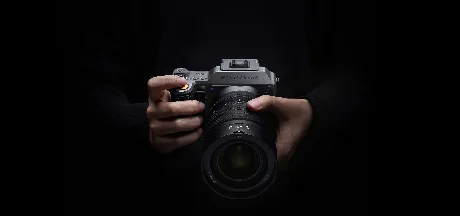
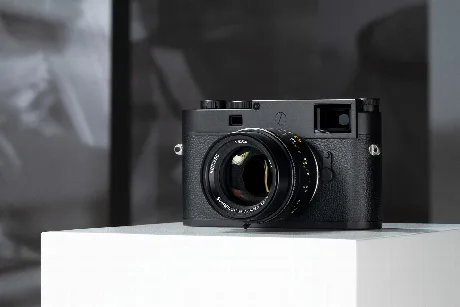
Leica Noctilux-M 75 mm f/1.25 ASPH.: portrait at full aperture
The Noctilux-M 75 f/1.25 ASPH. is a portrait lens that isolates the face within a plane of focus only a few centimetres deep. Here are its specifications and our advice for achieving focus at f/1.25, on the rangefinder or on an SL body.
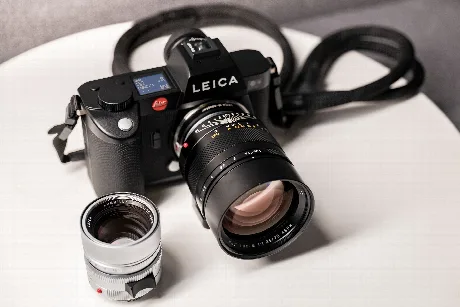
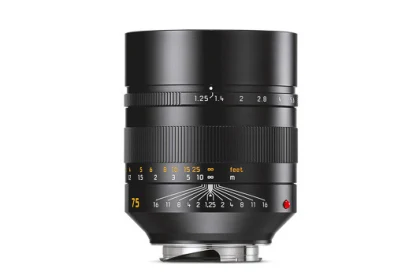
Leica introduced the Noctilux-M 75 f/1.25 ASPH. (part number 11676) at the end of 2017, with availability in early 2018. The brand describes it, together with the Noctilux-M 50 f/0.95 ASPH., as one of the two founders of a new family of very fast lenses. It is clearly intended for portraiture: a 75 mm focal length gives natural proportions to the face, and the wide aperture separates the subject from the background. Leica's launch announcement states that at f/1.25, the depth of field of this 75 mm is even shallower than that of the Noctilux 50 mm at f/0.95. That is the lens's main appeal, and also its main difficulty.
Let us begin with the technical data published by Leica. The optical formula has 9 elements in 6 groups, including two aspherical elements. The glass chosen has abnormal partial dispersion and low chromatic dispersion, to limit coloured fringing around sharp areas. A floating element, integrated into the focusing mechanism, maintains image quality from the minimum focusing distance to infinity. The diaphragm has eleven blades, which rounds out the background blur. The aperture adjusts from f/1.25 to f/16, with clicks and half-stops. Focusing starts at 0.85 m, giving a reproduction ratio of 1:8.8 and a minimum field of approximately 21 x 32 cm. The diagonal angle of view is 32° on full frame. The lens measures about 74 mm in diameter and 91 mm in length (102 mm with the integrated lens hood extended), accepts 67 mm filters and weighs approximately 1,055 g.
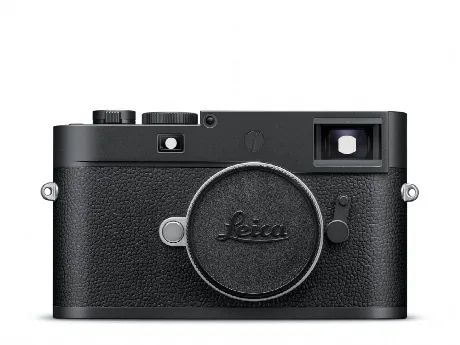
This weight matters. On an M11 or M10, the assembly tips forward. Support the lens from underneath, your left hand beneath the barrel, rather than carrying the body at arm's length. During a long handheld session, fatigue sets in and the risk of camera shake increases. At f/1.25 you will rarely need a slow shutter speed: keep it comfortable, at least 1/125 s, and let the ISO rise if the light falls.
To understand the difficulty, here are some figures. We calculated them using the usual full-frame convention (a circle of confusion of 0.03 mm). At 2 m from your subject and at f/1.25, the sharp zone measures about 5 cm in total. At the minimum distance of 0.85 m, it drops to about 1 cm. In practice, if the nearer eye is sharp, the other eye and the ears may already be soft. Therefore choose your point of sharpness before releasing the shutter: generally, the eye nearest the lens.
On the rangefinder, focusing requires a method. The photographer Thorsten von Overgaard, who published a lengthy essay on this lens, finds it rather easy on the rangefinder, provided there is contrast: you need sharp lines to align in the viewfinder. Aim therefore at the edge of the iris, the limit of an eyelash or an eyeglass frame, rather than at an even cheek. Avoid focusing at the centre and then reframing. With a depth of field this short, simply turning the camera moves the plane of sharpness. Focus on the eye instead, then move your upper body very slightly forward or back to correct, rather than touching the focusing ring again. Finally, at such an aperture, the slightest misalignment of the rangefinder shows. If your images are often sharp slightly in front of or behind the intended point, have the alignment of your body checked.
The electronic viewfinder changes a great deal. Leica recommended it from the launch: electronic viewing, with the Visoflex, is particularly suited to this lens. On an M11, the rear screen or the Visoflex can magnify the image to check sharpness on the eye. The same logic applies to the Leica SL: with the M-Adapter L ring, the Noctilux mounts on the body, as Leica intends. Magnification and focus peaking then become genuine tools. The photographer Kristian Dowling, in his field test, sees a clear advantage over the rangefinder for verifying sharpness. One point to note: the Leica Q have a fixed lens and therefore cannot accept an M lens. To use this Noctilux without a rangefinder, you need an SL body or another L-mount body.
Stay at full aperture when the background matters as much as the subject: a street at night, a dark interior, foliage. Stop down to f/2 or f/2.8 for a double portrait or a three-quarter face: you keep pronounced blur with a more comfortable margin. Leica designs its Noctilux lenses to be fully usable from full aperture, and for this 75 mm it highlights a background blur with soft transitions.
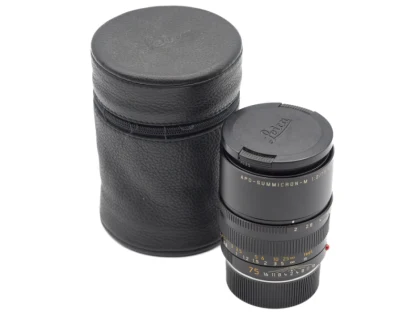
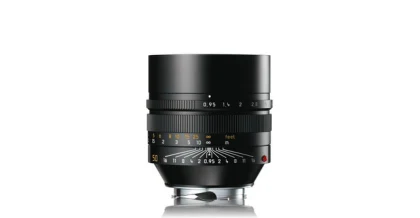
The Noctilux-M 75 f/1.25 ASPH. is in stock at the shop, 59 rue Condorcet, Paris 9e. We advise you to try it on your own body to judge its weight and your success on the rangefinder. For comparison, you may also try at the shop the Noctilux-M 50 f/0.95 ASPH., with its shorter focal length, and the APO-Summicron-M 75 f/2 ASPH., which weighs about 430 g, if you want a 75 mm to carry everywhere.