Alan Schaller: Tokyo in Black and White with the Leica M11 Monochrom
Leica showcases the work of London street photographer Alan Schaller, who photographs Tokyo with the M11 Monochrom. We look at his vision, his method and the deliberately pared-down kit he uses.
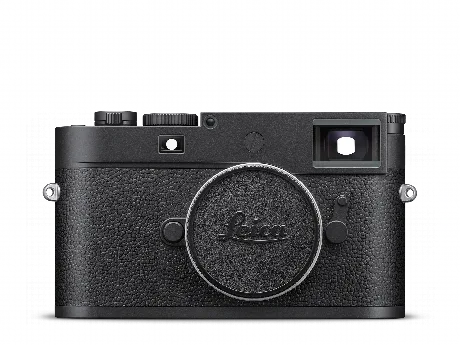
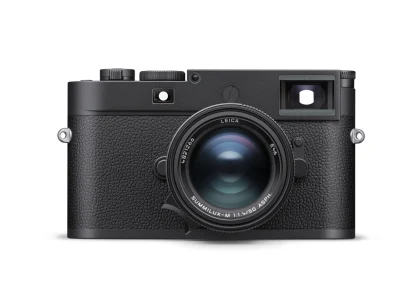
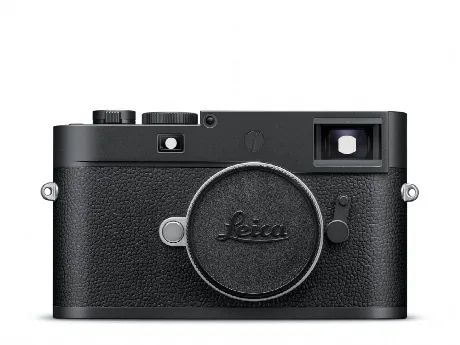
Leica features the work of many photographers on its website, and Alan Schaller holds a special place among them. The brand highlights him in its "The Art of Leica" campaign, in the section devoted to street photography, "The Art of Street Photography", alongside Billy Dinh and Jason Roman. It describes him as a leading figure of contemporary black-and-white photography. This London-based photographer works on the street with an M rangefinder that cannot see colour: the Leica M11 Monochrom.
In his images, the construction is what strikes you first. For the series Leica is publishing, shot in Tokyo, Alan Schaller seeks out contrast and geometry in the city's underground tunnels and at its major crossings, with a touch of surrealism. The human figure remains central, even when it is only a small silhouette within a setting of lines and light. He describes his own photography in four words, quoted by Leica: "black and white, abstract, surreal, humanist".
The choice of Tokyo matters. The city is full of colour, signage and movement, and one might think it ill-suited to a monochrome camera. This body of work shows the opposite. Without colour, the structure of the scene emerges: the light and dark masses, the diagonals, the silhouettes. Leica speaks of a clear and serene but powerful visual language, amid the city's bustle. Black and white is not a filter added afterwards: it is a way of seeing from the moment of capture.
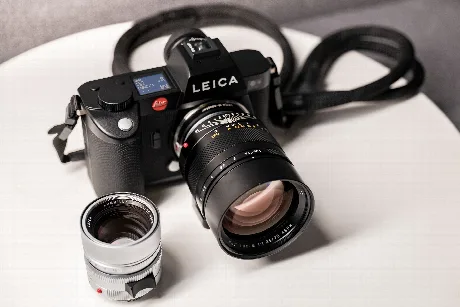
His method is very restrained. According to Leica, he works with a single body and a few manual-focus lenses. Some scenes demand speed, others patience, and he follows the rhythm of the street. This alternation suits a rangefinder M well. When things move quickly, the focusing ring and its distance markings let you set sharpness before the scene unfolds. When you must wait, the viewfinder, which shows what happens beyond the bright frame lines, helps you spot the passer-by who will complete a composition already in place.
His path in photography is recent. He only began in 2015, after working in music and film. The following year, his images were appearing in British newspapers and magazines. He also nurtures a community around the practice: he co-founded Street Photography International and founded Irys, a platform that aims to connect photographers beyond the feeds of social networks.
If you practise street photography and his work speaks to you, there are two things to take away. First, the equipment matters less than the discipline it imposes. One body, a few fixed focal lengths with manual focus, and the habit of composing with light rather than colour: this way of working forces you to read a scene before photographing it. Second, a sensor designed solely for black and white changes your relationship with the file. There is no colour version to fall back on, and the decision is made at the moment of exposure, as with film. Some photographers see this as a constraint. Others find in it what gives their work its coherence.
Paris, incidentally, lends itself very well to this exercise. The covered passages, the metro platforms or the staircases of Montmartre, a few minutes from the shop, offer the same play of lines and backlighting seen in his images of Tokyo.
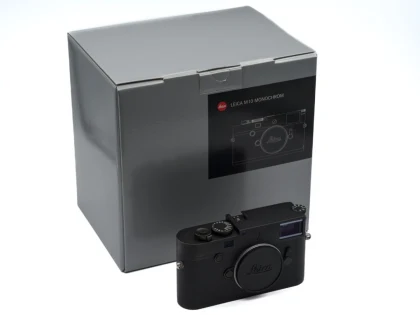
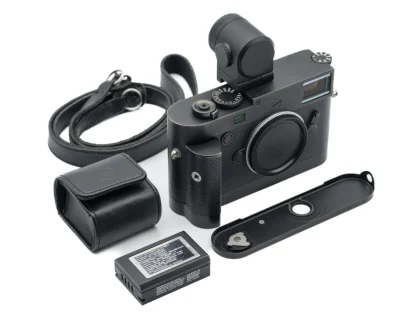
The Leica M11 Monochrom is available at the Elle et Lui Photographie shop, 59 rue Condorcet, Paris 9e (product page: see the item). Torn between a colour M and a Monochrom, or unsure which focal lengths will accompany it? The simplest step is to come and handle it. We can fit it with various M lenses so you can judge the viewing, focusing and rendering for yourself before going out to find your own geometries.