Used Leica M: the points to check before buying
Rangefinder, sensor, shutter, condition, serial number: a used Leica M is judged on a few precise checks. Here is how to carry them out, and why the M9 and M Monochrom CCD call for particular attention.
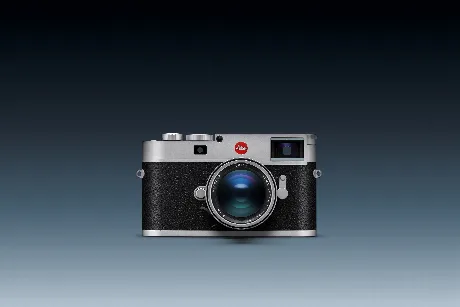
A Leica M is built to last, which is precisely why the used market is so active. A body ten years old can still be used every day, provided it has been well treated. Before you decide, a few simple checks will spare you most unpleasant surprises. Here are the ones that really matter.
Start with the rangefinder, the heart of an M. Aim at a very distant subject, an antenna or a roof edge, with the lens set to infinity: the two images must overlap exactly, with no horizontal offset. Also check that there is no slight vertical offset, a sign of an impact or an adjustment that has moved. Repeat the test at close range, on a sharp, high-contrast subject, with a fast lens wide open. This is where a poorly calibrated rangefinder reveals itself: focus looks right in the viewfinder yet the photo is soft. While you are at it, observe the clarity of the viewfinder: haze, a spot or a dull rangefinder patch calls for a workshop visit.
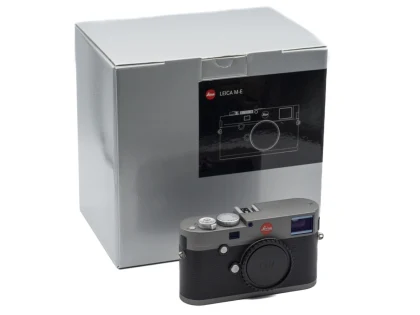
Next comes the sensor, and it is on the early digital generations that you must be most attentive. The Leica M9, M9-P, M Monochrom (the first version, with a CCD sensor) and M-E (Typ 220) suffered from a corrosion problem affecting the glass placed in front of the sensor, which Leica officially acknowledged at the end of 2014. The defect appears as small spots surrounded by a white halo, especially at small apertures. To spot it, photograph a uniform sky or a plain white wall at f/16, then examine the file on screen: dust comes off when cleaned, a corrosion spot does not.
This point weighs all the more because the original repair no longer exists. Leica first replaced affected sensors free of charge, then from June 2015 fitted a corrected version reputed to be immune to the problem. In August 2020, the brand announced that these CCD sensors were no longer produced and could therefore no longer be replaced. It still states on its website that other repairs remain possible on this generation of bodies, until further notice. In place of sensor replacement, it offers special trade-in terms towards a current model, reserved for bodies whose sensor is genuinely affected; in May 2025, this programme was extended to film M cameras. The models offered and the terms change over time: check with Leica. Independent workshops have also offered to replace only the sensor glass. In practice: on an M9 or an M Monochrom CCD, ask whether the sensor has already been changed by Leica and on what documentary proof, then still do the sky test.
The shutter is checked by ear and by eye. Fire at every speed, from the slowest to the fastest: the sound must change evenly, without hesitation or catch. On a digital body, photograph the same scene several times at constant exposure, changing only the speed and aperture pair. The files should have even brightness, with no dark band along one edge. On a film camera, open the back and look at the curtains: no creases, no holes, no fingerprints.
The external condition tells the story of the camera. Brass showing on the edges is evidence of normal use and does no harm. A marked bayonet, a dented top plate or damaged screws, on the other hand, suggest a fall or a clumsy repair. Turn the dials, test the flash shoe, the frame selector lever, the card and battery door, and check that the screen has no deep scratches or dead pixels.
History and serial number go hand in hand. The number engraved on the body must match that on the invoice, the warranty card and the box where these exist. A purchase invoice, or a service record from Leica or a recognised repairer, are genuine assets: they reassure about provenance and tell you what has already been done. Be wary of a seller who can show nothing, or of a serial number that has been erased.
Finally, think about what comes after. On an older model, ask before buying what Leica's after-sales service can still repair. Also check that the accessories specific to the body's generation, starting with its battery and charger, are still easy to find. An attractive camera that can no longer be repaired if it breaks down is not a good deal.
Buying from a specialist shop gives you recourse if a fault appears after purchase. The used Leicas we sell are covered by a three-month shop warranty. If you are torn between several generations, come and compare: you could, for example, handle the Leica M10-P "ASC 100 Edition" or the Leica M11-D, available in the shop at 59 rue Condorcet, Paris 9th. Bring your favourite lens too: it is with that lens that you will know whether the rangefinder suits you.